

Thai Massage Explained, Benefits, What to Expect, and More
Thai Massage is a hands-on bodywork style that blends pressure, stretching, and guided movement. In simple terms, it feels like a mix of massage and assisted yoga. It’s often called Thai yoga massage because the therapist moves your body through gentle stretches while also using steady pressure to release tight areas.
Unlike many table massages, Thai Massage is usually done fully clothed on a padded mat. There’s often no oil, and the session feels more active than Swedish massage or other styles that focus mostly on long, flowing strokes. Because of that, many people leave feeling both relaxed and refreshed, not just sleepy.
The therapist may use their hands, thumbs, elbows, knees, or feet to apply pressure and guide your body into supported positions. Even so, you don’t need to be flexible or know anything about yoga to enjoy it. The session is designed to meet you where you are, whether you want help with stiffness, stress, sore muscles, or simply a better sense of ease in your body.
This article will walk you through how Thai Massage works, what usually happens during a session, and the benefits people often notice, such as less tension, better mobility, and a calmer mind. It will also cover safety, who should take extra care, and how Thai Massage compares with styles like Swedish and deep tissue. So if you’ve been curious but aren’t sure what to expect, you’re in the right place.
Recent research and long-standing practice both point to the same idea: Thai Massage can support flexibility, circulation, stress relief, and overall body awareness. That’s a big reason it’s stayed popular for so long. For first-time readers and longtime fans alike, understanding the basics makes it much easier to choose the experience that fits you best.
What Thai Massage Is and Where It Comes From
Thai Massage stands apart from many other massage styles because it works with the whole body, not just one sore spot. It blends pressure, guided movement, and stretching in a way that can feel both grounding and energizing. To many people, it seems like a moving meditation for the muscles and joints.
Its roots are just as interesting as the session itself. Thai Massage grew from a mix of healing ideas, spiritual practice, and hands-on teaching passed down over many generations. That history still shapes how the method is practiced today, even though many modern clients book it for simple reasons like less tension, better mobility, and stress relief.
The simple idea behind Thai Massage
At its core, Thai Massage is a method of helping the body move and release tension through acupressure, assisted stretching, joint movement, and rhythmic compression. Instead of rubbing oil into the skin with long strokes, the therapist applies steady pressure and guides your body through supported positions. Think of it as bodywork with motion built in.
A session often follows the body’s natural lines and major muscle groups. In traditional practice, these pathways are called Sen lines, which are thought to carry the body’s life energy. While that idea comes from older healing systems, many people today experience Thai Massage in a more practical way. They notice looser hips, easier movement, less stiffness, and a calmer nervous system.
The therapist doesn’t rely on just their hands. They may use:
- Hands and thumbs for focused pressure
- Elbows for deeper work on larger muscles
- Knees to create broad, steady compression
- Body weight to apply pressure with control, not force
That use of body weight is a big part of what makes Thai Massage feel different. Good pressure doesn’t come from pushing hard. It comes from balance, rhythm, and knowing how to work with your body rather than against it.
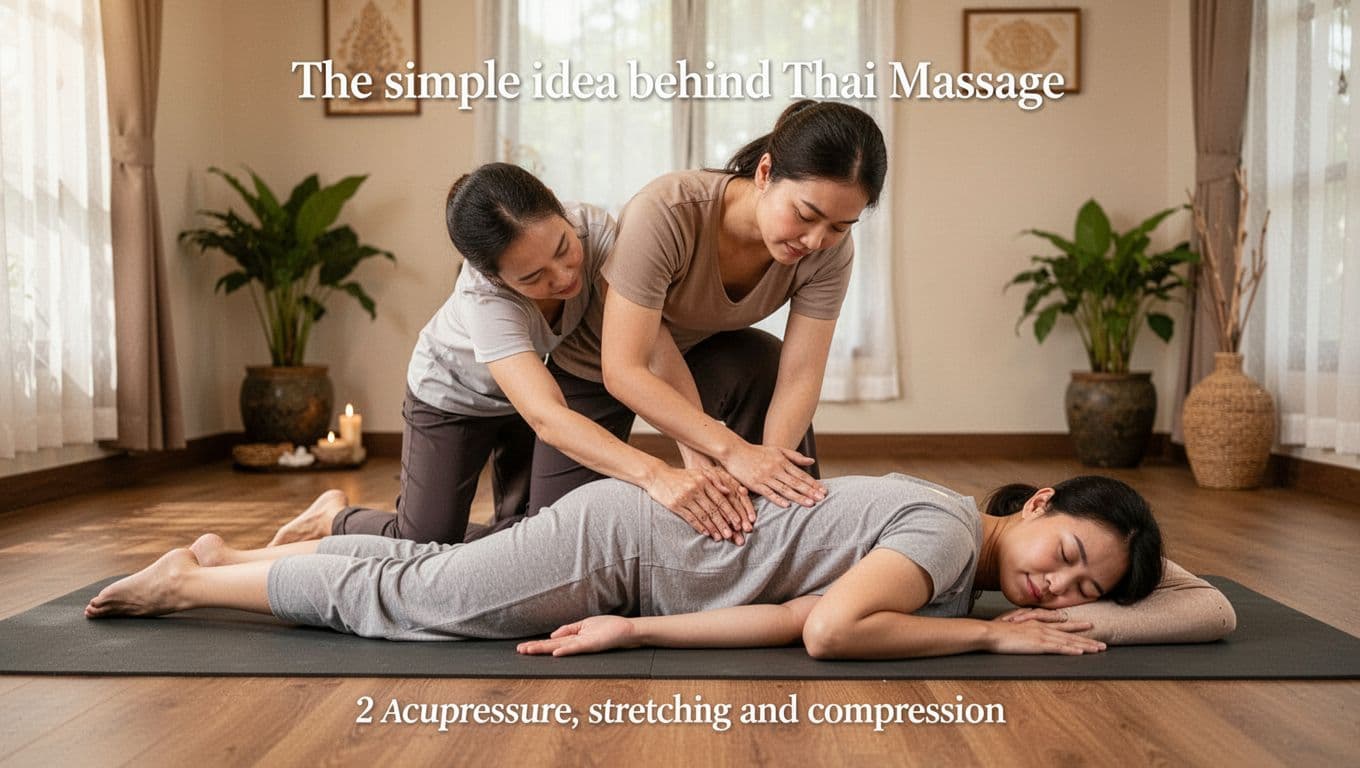
Because of this, Thai Massage can feel a bit like your body is being gently “tuned.” One moment the therapist compresses a tight area, then they open the joint, then they stretch the surrounding muscles. As a result, the work feels connected from head to toe, not random or rushed.
Thai Massage is less about isolated rubbing and more about guided movement, pressure, and flow through the whole body.
A short look at its traditional roots
Thai Massage has a long history, with roots often traced back more than 2,500 years. Tradition links it to Jivaka Kumar Bhaccha, an Indian healer who is also known in some sources by names such as Shivago Komparaj. He is remembered in Thai healing tradition as an early teacher of medicine and bodywork, and many people see him as the spiritual father of Thai Massage.
The practice grew from a blend of Ayurveda, Buddhist healing traditions, and local Thai knowledge. Ayurveda contributed ideas about balance and energy in the body. Buddhist tradition added the spirit of mindful touch and compassion, often described through the practice of loving-kindness. Over time, these influences took shape in Thailand and became part of traditional medicine.
For many years, Thai Massage was taught in temples and shared directly from teacher to student. That matters because this was not just a technique list written in a manual. It was a living practice, learned through touch, repetition, and close guidance. In other words, students learned with their hands as much as their minds.
One of the best-known places tied to this history is Wat Pho in Bangkok. The temple is famous for preserving traditional Thai medical knowledge, including massage teachings and body maps. Although parts of Thailand’s medical records were lost in past wars, temple-based teaching helped keep the practice alive.
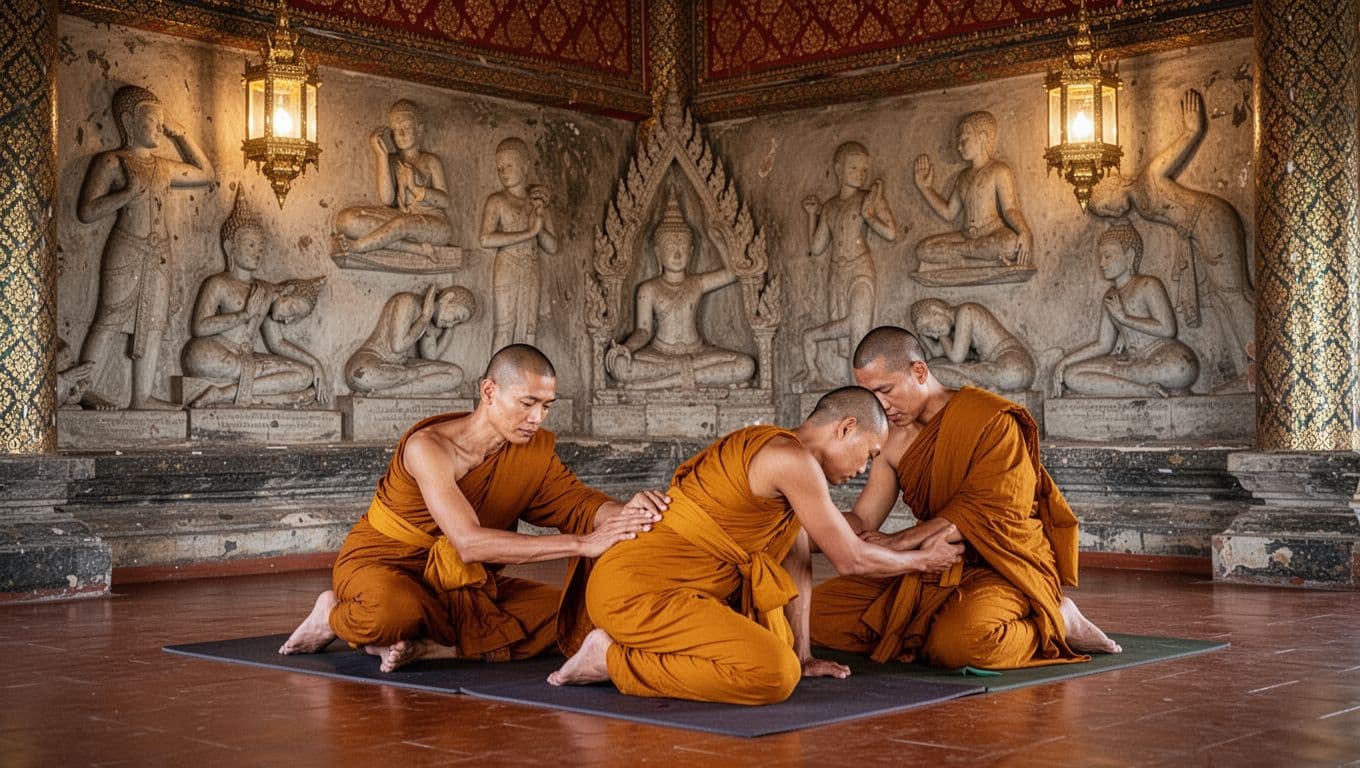
Traditional theory also includes the Sen lines, a network of energy pathways in the body. Not every modern client thinks in those terms, and that’s fine. Still, the concept remains part of Thai Massage history and training. Today, some people value the energy-based view, while others simply want help with tight muscles, better flexibility, and a quieter mind.
Why people often call it Thai yoga massage
You will often hear Thai Massage called Thai yoga massage, and the nickname makes sense. During a session, the therapist may move your arms, legs, hips, and spine into yoga-like positions while supporting your weight the whole time. You stay relaxed while the therapist does the guiding.
That creates the feeling of yoga without you needing to lead the movement. Some stretches are gentle and simple. Others feel broad and opening, like your body is being given more space to breathe. Because the work includes twisting, folding, reaching, and lengthening, the yoga comparison stuck.
Still, there’s one important point to keep in mind: you do not need yoga experience to benefit from Thai Massage. You also don’t need to be flexible. A good therapist adjusts the session to your body, your comfort level, and your range of motion. So if touching your toes feels impossible, Thai Massage can still be a good fit.
That’s why the style appeals to so many people. It can feel active without being overwhelming, and deep without being harsh. For some, it’s like having someone help your body remember how to move well again. For others, it’s simply a powerful way to unwind while getting a full-body stretch at the same time.
What Happens During a Thai Massage Session
If you’ve never had a Thai Massage before, the unknown can feel like the hardest part. The good news is that most sessions follow a calm, easy-to-understand rhythm. You stay clothed, the work is usually done on a padded mat, and your therapist guides the session step by step so you never have to guess what’s happening next.
Compared with oil massage, Thai Massage feels more interactive. There is still plenty of relaxation, but there is also movement, stretching, and steady pressure. If you’re browsing different massage services, this is the one that often feels like bodywork and assisted stretching in one session.
Before the session starts, what to wear and how to prepare
Traditional Thai Massage is usually done fully clothed in loose, comfortable clothes. Think soft pants, a T-shirt, or other easy-to-move-in pieces. Tight jeans, stiff fabrics, and anything restrictive can get in the way because the therapist needs room to move your arms, legs, and hips comfortably.
In the traditional style, there are usually no oils. That means you won’t need to undress as you would for some other types of massage. Instead, you’ll settle onto a padded mat, which helps support the stretches and position changes that happen during the session.
A little prep goes a long way. Most people feel better when they:
- Arrive hydrated, because well-hydrated muscles tend to feel less guarded
- Avoid a heavy meal right before the appointment, since twisting and stretching on a full stomach can feel uncomfortable
- Show up a bit early, so there’s time to settle in and talk through any concerns
Just as important, tell your therapist about injuries, recent surgeries, pregnancy, pain points, or health conditions before the session starts. If your lower back is sensitive, your shoulders are healing, or you simply don’t want a certain area worked on, say so. That isn’t being difficult, it’s part of getting a session that fits your body.
A good Thai Massage starts with clear communication, not with pushing through discomfort.
The step by step flow of a traditional Thai Massage
Most Thai Massage sessions begin quietly and gradually. In many cases, the therapist starts at the feet and legs, using rhythmic pressing and compression to help your body settle. This opening can feel grounding, almost like someone is gently pressing a reset button on your muscles.
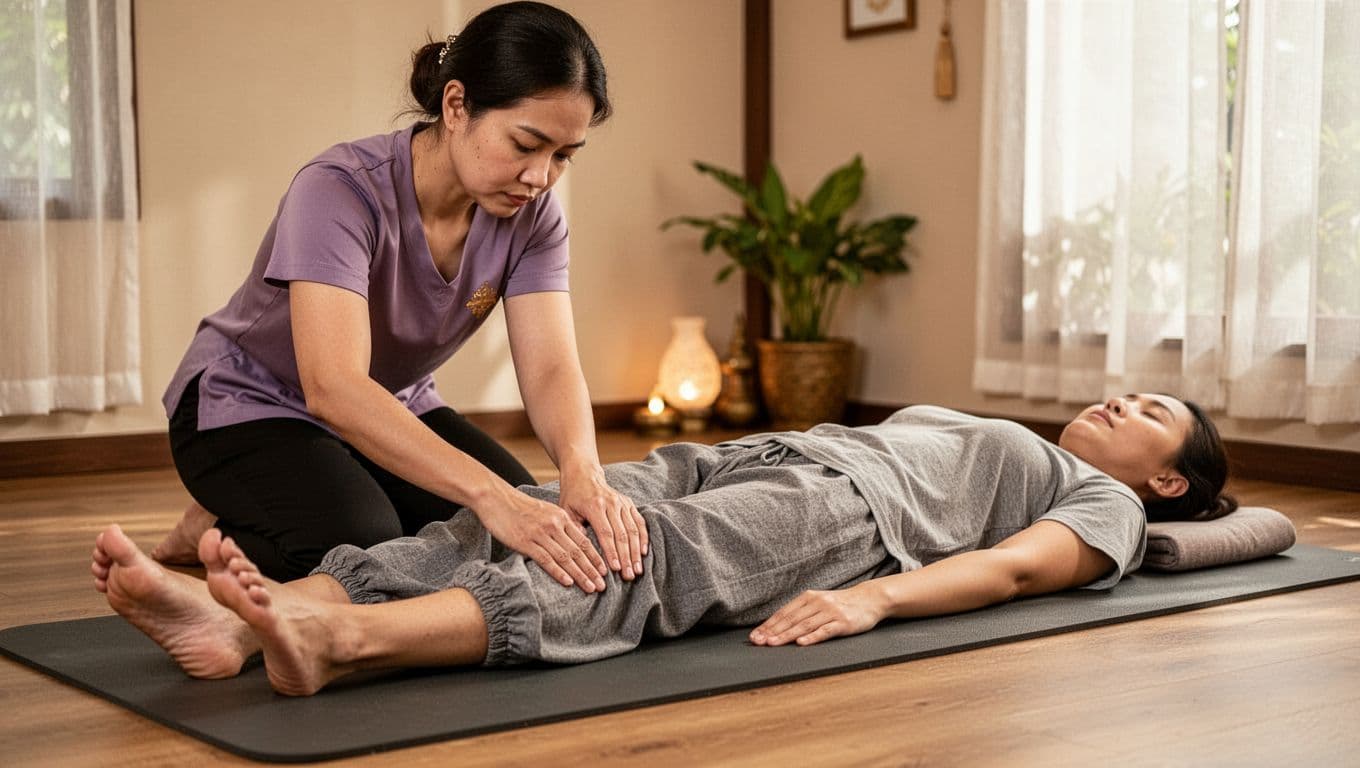
From there, the therapist will often work up through the legs with palms, thumbs, and body-weight pressure. You may notice pressing, rocking, and broad compression rather than slippery strokes. This is one reason Thai Massage feels so different from table massage. The contact is steady and connected, not rushed.
As the session continues, many therapists add assisted stretches for the ankles, knees, hips, and lower back. These stretches are usually slow and controlled. You don’t have to perform them on your own. Instead, your therapist guides the movement while watching how your body responds.
After the legs and hips, the work may move into the torso and upper body. Depending on the therapist’s style, you might be on your back for part of the session, then side-lying or face-down for other parts. Each position gives access to different muscle groups and joints, so the session can address the body as a whole rather than focusing on one area.
A common flow looks something like this:
- Feet and lower legs for grounding and warming up
- Legs and hips with compression and assisted stretching
- Mid-body work with gentle twisting, rocking, or pressure
- Side-lying or face-down work for the back, glutes, and shoulders
- Neck, shoulders, and seated stretches to finish
Near the end, many sessions shift toward the neck, shoulders, and upper back. Some therapists may finish with seated stretches, where you are gently guided into supported spinal movements. This closing phase often feels spacious and freeing, as if the whole body has a bit more room.
That said, there is no single script. Every therapist has their own rhythm, and every body needs something different. A skilled practitioner may change the order based on your flexibility, pain points, goals, or comfort level on that day.
How deep pressure and stretching should feel
Thai Massage can be strong, but strong is not the same as painful. Firm pressure often feels intense in a productive way, like a tight muscle finally getting the attention it needed. Pain, on the other hand, tends to feel sharp, alarming, or like your body is bracing against the work.
During deeper techniques, you may feel a sensation often described as “good pressure.” It might be broad, steady, and very noticeable, especially in the calves, hips, back, or shoulders. At the same time, you should still be able to breathe normally and stay relatively relaxed.
Stretches can feel similar. A good stretch creates a sense of opening and length. It may feel challenging for a few seconds, especially if you’re stiff, but it should never feel like you’re being forced past your limit. Thai Massage is not a flexibility test, and no part of the session should feel unsafe.
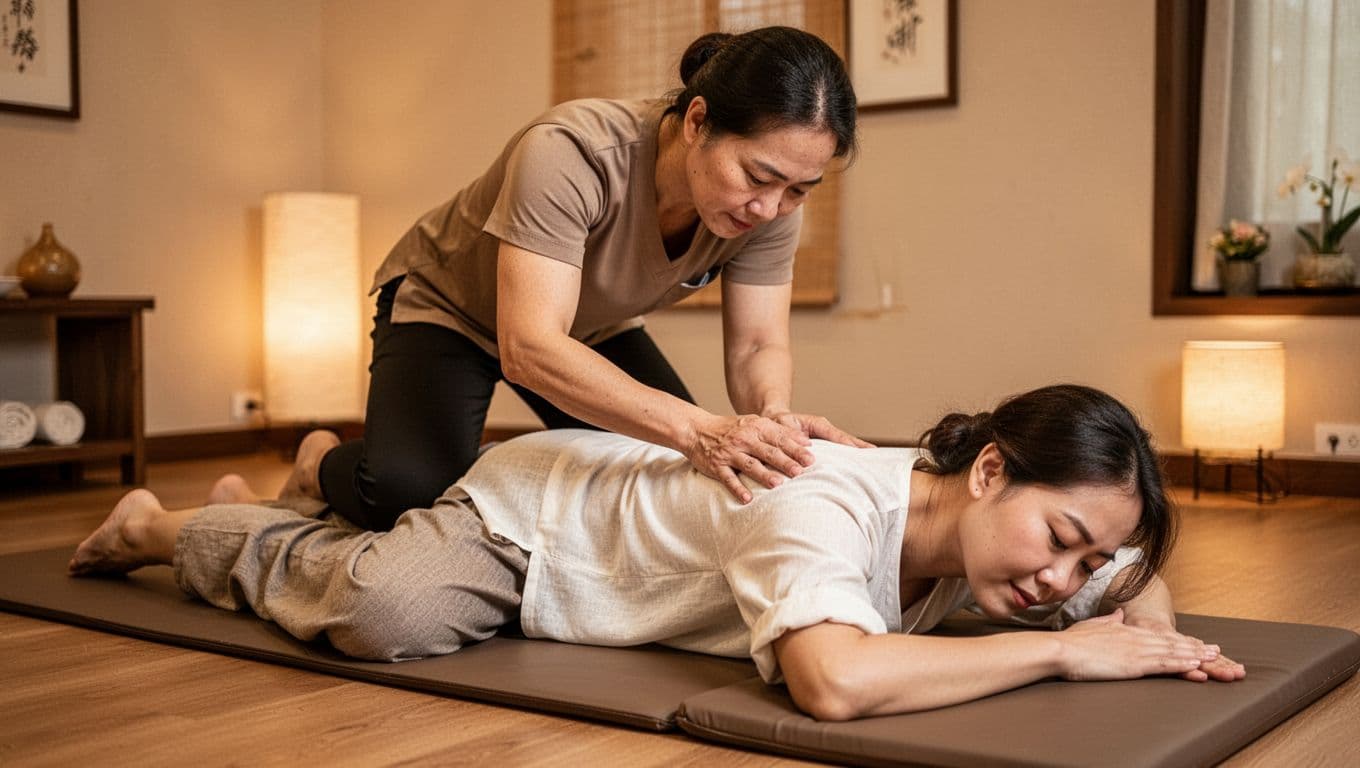
This is where communication matters most. If the pressure feels too deep, the stretch feels too big, or something simply feels off, speak up right away. A good therapist expects that feedback and adjusts without making it awkward. In fact, that back-and-forth helps create a better session.
Here are a few simple ways to gauge the sensation:
- Strong but okay: You feel deep pressure, yet you can breathe and stay calm
- Too much: Your body tightens, you hold your breath, or the sensation feels sharp
- Just right: You feel challenged, then more open as the technique continues
Think of it like stretching a stiff sweater gently back into shape. Enough tension helps, but too much force does the opposite. Thai Massage works best when pressure and movement stay within a range your body can accept.
What you may feel right after the appointment
Right after a Thai Massage, many people notice a mix of lightness, looseness, and calm. Your body may feel taller, easier to move, or less packed with tension. Some people leave deeply relaxed, while others feel surprisingly energized, almost like they just woke up from a very good nap and a very good stretch at the same time.
It’s also normal to feel mild soreness later, especially if the session included deeper pressure or if your muscles were very tight going in. That soreness should be manageable and short-lived, similar to what you might feel after gentle exercise or a long stretch session. It shouldn’t feel sharp or worrying.
You may also notice:
- Better mobility, especially in the hips, back, and shoulders
- Less muscle tension and easier breathing
- A calmer mood or a quieter mind
- More energy, particularly if your body had been feeling heavy and stiff
Aftercare is simple, and it helps you get more from the session. Drink some water, move gently, and give your body a little space to settle. A short walk, light stretching, or an easy evening often feels better than jumping straight into hard exercise.
If you feel tired, rest. If you feel open and refreshed, enjoy that feeling. Either response can be normal. Thai Massage often leaves people feeling like their body has been wrung out in the best way, with less tension and more freedom to move.
The Main Benefits of Thai Massage for Body and Mind
Thai Massage is popular for a simple reason, it often helps people feel better in more than one way at once. You may walk in with tight hips, a busy mind, or that heavy, stuck feeling that builds after long workdays. Then you leave feeling looser, calmer, and more present in your own body.
That mix matters. Some massage styles focus mostly on relaxation, while others focus mostly on sore tissue. Thai Massage often sits in the middle. It can feel grounding and energizing at the same time, which is a big part of its appeal for people who want both physical relief and mental reset.
How Thai Massage can help tight muscles and stiff joints
When your muscles stay tense for hours, your joints often stop moving as freely as they should. That can happen if you sit at a desk, drive often, train hard, or simply carry stress in your body. Over time, the hips feel sticky, the shoulders get guarded, and the back starts to move like a rusty hinge.
Thai Massage helps by combining pressure with assisted stretching and gentle joint movement. Instead of working on one tight spot in isolation, the therapist often treats the whole chain around it. For example, a stiff lower back may improve when the hips, glutes, and hamstrings start moving better too.
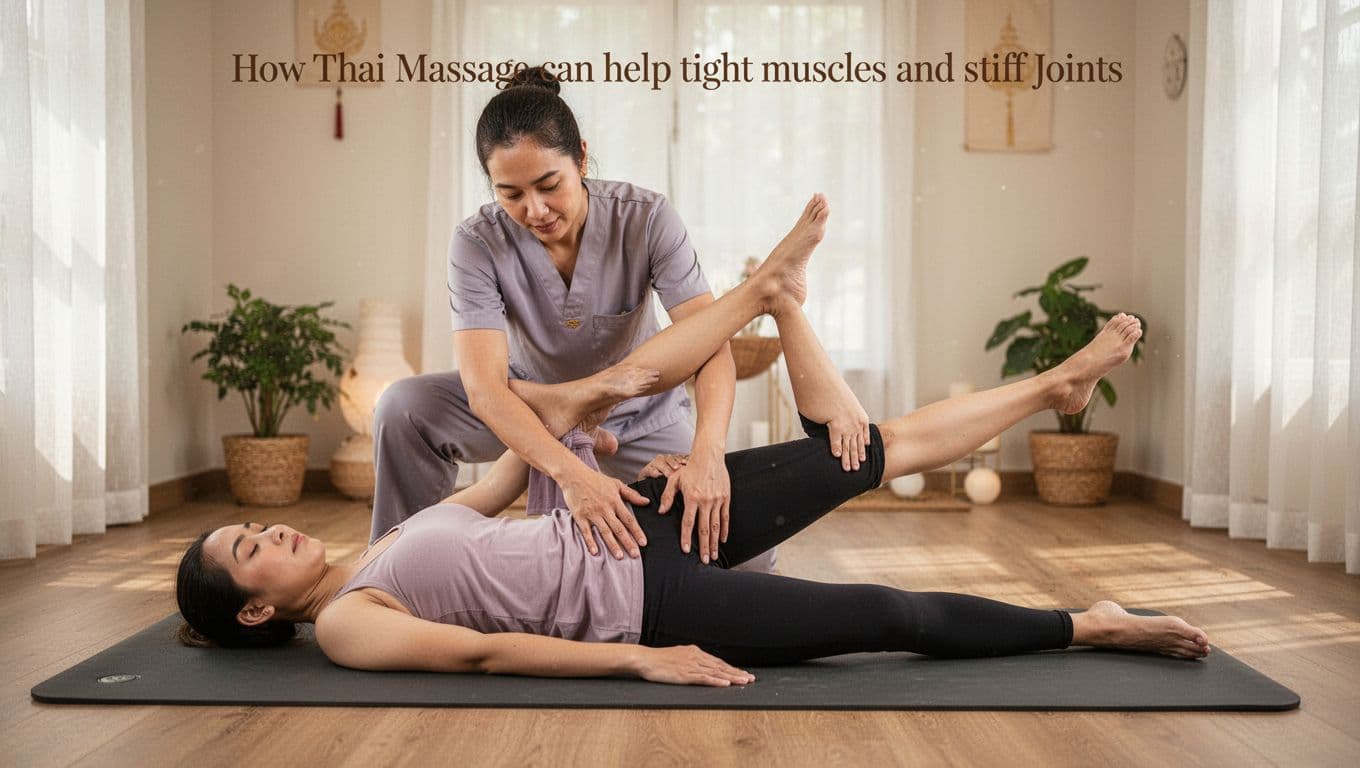
This is where mobility and range of motion come in. Mobility is your ability to move with control. Range of motion is how far a joint can move. If your hips barely open, your shoulders resist overhead movement, or your spine feels locked up, daily life can feel harder than it should.
Thai Massage may help because it works on several things at once:
- Muscle tension: Steady pressure can help guarded areas soften.
- Joint motion: Gentle movement can encourage the body to move more freely.
- Stretch tolerance: Supported stretches may help muscles feel less resistant over time.
- Body balance: When one area loosens, nearby areas often move better too.
For people who sit a lot, this can be especially useful. Long periods in a chair tend to shorten the front of the hips, tighten the chest, and leave the upper back stiff. Thai Massage counters that pattern with opening movements and stretches that create space where your body has gone quiet.
Athletes and active people often like it for a different reason. Training can build strength, but it can also leave tissues feeling dense and overworked. Thai Massage can feel like maintenance for the moving parts, less about brute force and more about helping the body glide again.
Thai Massage often works best when it helps the body stop fighting itself.
If you’re generally tight, you don’t need to be flexible before booking a session. In fact, many people come in because they aren’t flexible. A good therapist meets your current range, then works within it. The goal is not to push you into dramatic shapes. The goal is to make normal movement feel easier, smoother, and less restricted.
Why many people leave feeling calmer and more clear headed
The benefits of Thai Massage are not just physical. Many people notice the mental shift almost as much as the muscle relief. After a session, the mind can feel less noisy, as if someone turned down the volume on everything that had been buzzing in the background.
Part of that comes from how the session is delivered. Thai Massage usually uses rhythmic pressure, steady pacing, and guided movement. That combination can encourage your nervous system to move away from a tense, alert state and toward a more settled one. In simple terms, your body gets a signal that it’s safe to let go.
Stress often lives in the body first. You feel it in your jaw, shoulders, stomach, and breath before you even name it. Because Thai Massage works directly with those holding patterns, the calming effect can feel very tangible. Your breathing deepens, your muscles stop bracing, and your mind follows.
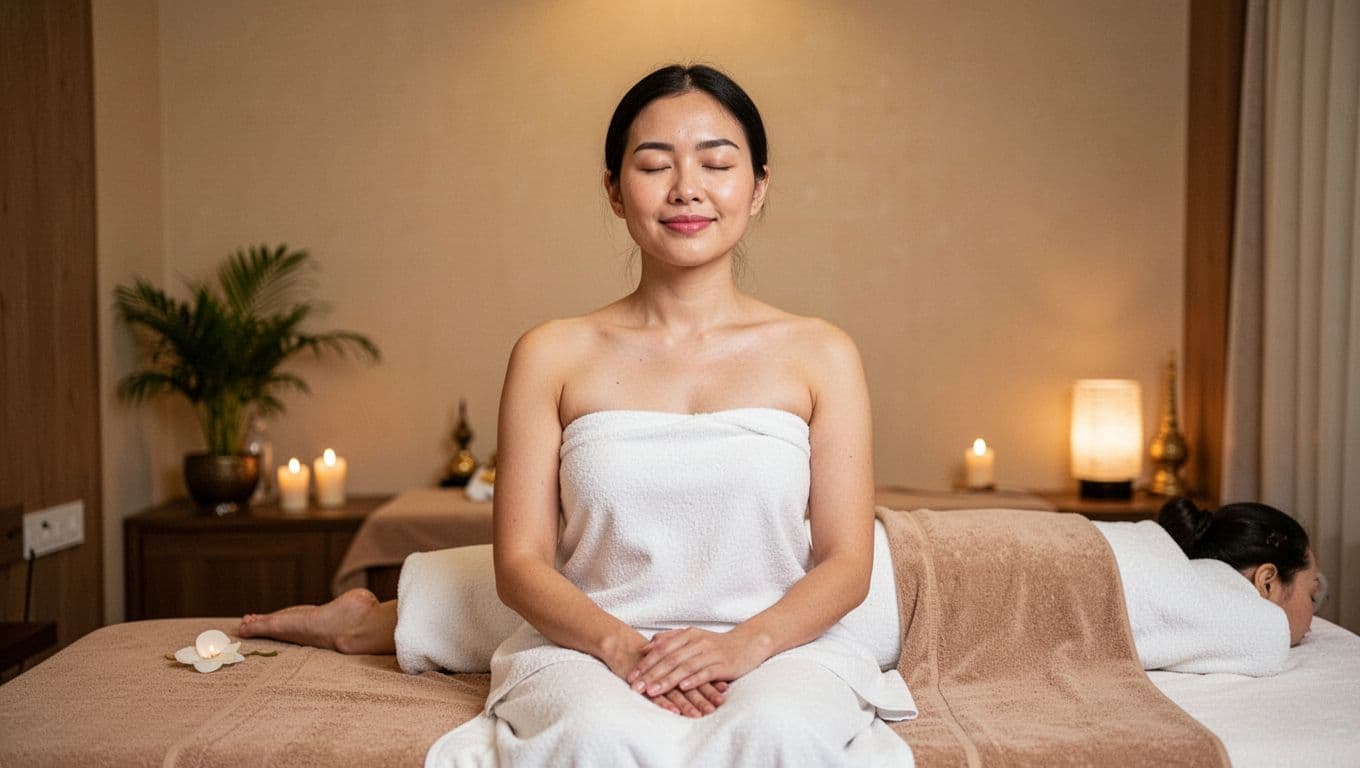
Another reason people leave more clear-headed is better body awareness. During the session, you notice where you’re stiff, where you hold tension, and where movement feels easy or restricted. That awareness can be surprisingly refreshing. It’s like cleaning a foggy window, suddenly you can sense your body more clearly.
This mental reset often shows up in a few ways:
- You feel less overstimulated and more grounded.
- Your thoughts seem slower and cleaner, not as scattered.
- Breathing may feel deeper and easier.
- You become more aware of posture, tension, and habits afterward.
That doesn’t mean Thai Massage is a cure for chronic stress or anxiety. Still, it can be a useful support tool. For many people, one session creates a short-term sense of calm. With regular sessions, some find it easier to notice stress sooner and respond before it builds into full-body tension.
There is also something mentally refreshing about being moved and supported instead of doing all the work yourself. In everyday life, you’re always holding, carrying, and pushing through. Thai Massage flips that pattern. For an hour or more, you get to stop managing everything and let someone guide the process. That alone can feel deeply restorative.
What research says about pain, flexibility, and stress
The research on Thai Massage is promising, but it should be read with some caution. A number of smaller studies suggest benefits for pain relief, flexibility, range of motion, and stress reduction. At the same time, many studies are limited by small sample sizes, short follow-up periods, or differences in technique.
For pain, some findings are encouraging. Studies have suggested that Thai Massage may help with short-term relief for issues like chronic tension headaches and lower back pain. In some cases, results were similar to other hands-on therapies. That doesn’t prove Thai Massage is the best option for everyone, but it does support why many people report feeling less discomfort after treatment.
Flexibility is another area where Thai Massage makes practical sense and has some research support. Because sessions include stretching and joint movement, improvements in range of motion are not surprising. A study on back pain patients found Thai Massage helped range of motion in ways comparable to joint-focused therapy. In everyday terms, people may notice easier bending, turning, and reaching.
Research has also pointed to possible effects on stress. One study found Thai Massage lowered a saliva-based stress marker more than quiet rest in healthy adults. That lines up with what many clients describe after a session, less mental clutter, less physical bracing, and a greater sense of ease.
Circulation gets mentioned often too. Some studies on Thai foot massage found improvements in skin blood flow and ankle mobility, including in people with diabetes. That does not mean Thai Massage treats circulation disorders. Still, it suggests the rhythmic pressure and movement may support healthy blood flow in some settings.
A balanced way to read the evidence is this:
- There is meaningful early support for Thai Massage in pain, flexibility, and stress-related outcomes.
- The results fit what many clients feel in real life, especially around mobility and relaxation.
- More high-quality research is still needed before making broad medical claims.
So, where does that leave you? In a practical place. Thai Massage has a strong reputation, helpful early evidence, and a long history of use. It’s reasonable to see it as a wellness practice that may support comfort, movement, and calm. It’s less reasonable to treat it like a guaranteed fix for every pain problem or stress issue.
If you have ongoing pain, a recent injury, or a health condition, Thai Massage should fit into the bigger picture of your care, not replace needed medical advice. But for many healthy adults, or for people dealing with everyday stiffness and stress, it can be a smart and satisfying part of feeling better in both body and mind.
Thai Massage Compared With Swedish, Deep Tissue, and Other Popular Styles
If you’re trying to choose the right session, the biggest difference is how you want to feel during and after it. Thai Massage is more active than many popular styles. It blends pressure, stretching, and guided movement, so the experience often feels like bodywork plus mobility work in one.
By contrast, Swedish, deep tissue, hot stone, sports, and aromatherapy each lean in a different direction. Some are built for full-body calm. Others focus on sore tissue, athletic recovery, or stress relief through scent and soothing touch. If you want to compare session types before booking, this guide to factors shaping massage therapy costs can also help you weigh value alongside feel and purpose.
Thai Massage vs Swedish massage, which is more relaxing
For most people, Swedish massage feels more relaxing in the classic sense. You lie on a table, usually under a drape, while the therapist uses oil or lotion and long, flowing strokes. The whole session is designed to quiet the nervous system and help you melt into the table.
Thai Massage relaxes people too, but it gets there in a different way. Instead of oil-based table work, you stay clothed and lie on a padded mat. The therapist uses compression, pressure, and assisted stretches, so your body is being moved and opened rather than simply soothed with gliding strokes.
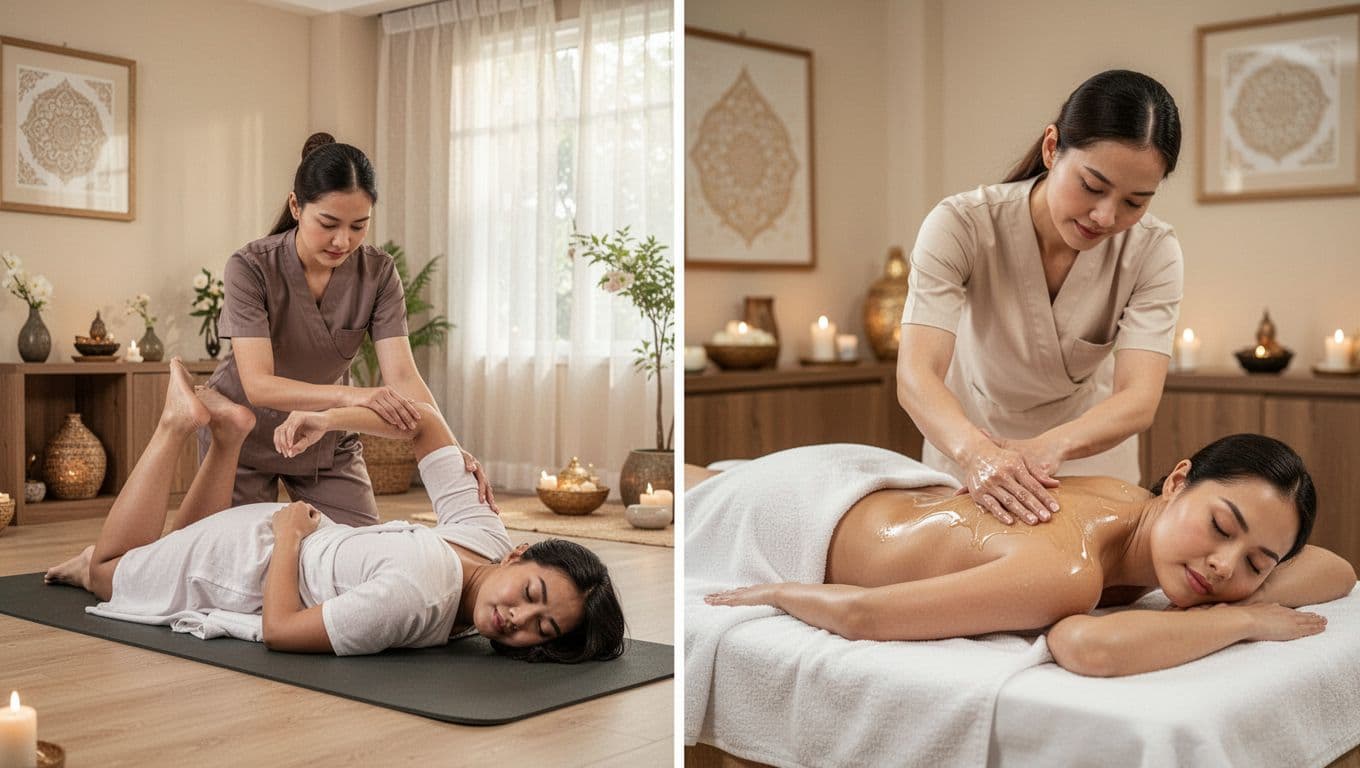
Think of it this way, Swedish massage is like floating on calm water. Thai Massage is more like having someone gently untangle and lengthen your whole body. Both can leave you peaceful, but the path feels very different.
A simple side-by-side view makes the choice easier:
| Style | Setting and feel | Relaxation style | Best fit for |
|---|---|---|---|
| Thai Massage | Clothed, on a mat, guided movement and stretches | Relaxation through release, mobility, and body awareness | People who like stretching, stiffness relief, and a more active session |
| Swedish massage | Oil or lotion, on a table, long gliding strokes | Passive relaxation and full-body calm | Beginners, stress relief seekers, and anyone who wants to switch off |
So, which one should you pick?
- Choose Swedish massage if you want to be still, warm, and deeply soothed.
- Choose Thai Massage if you want relaxation with more movement and a bigger sense of physical release.
- Pick based on your mood. If you feel stressed and overstimulated, Swedish often wins. If you feel tight, compressed, and stuck, Thai Massage may feel more satisfying.
If your idea of relaxing means “do not move me, just let me sink,” Swedish usually fits better. If relaxing means “help my body loosen up everywhere,” Thai Massage often stands out.
Thai Massage vs deep tissue, which feels more intense
This comparison trips people up because both can feel strong. Still, deep tissue usually feels more locally intense, while Thai Massage often feels more globally intense. In other words, deep tissue tends to zero in on knots and deep muscle layers. Thai Massage spreads pressure and stretching across the whole body.
Deep tissue massage usually happens on a table with oil or lotion. The therapist works slowly into dense areas, often using fingers, knuckles, forearms, or elbows. If you have a stubborn knot in the upper back or chronic tightness in the glutes, deep tissue often aims straight at that problem.
Thai Massage can also be strong, but the pressure usually comes with movement. You might feel palm pressure on the legs, compression through the hips, then a long supported stretch that changes how the whole area feels. So instead of attacking one knot for several minutes, the therapist may work the chain around it.
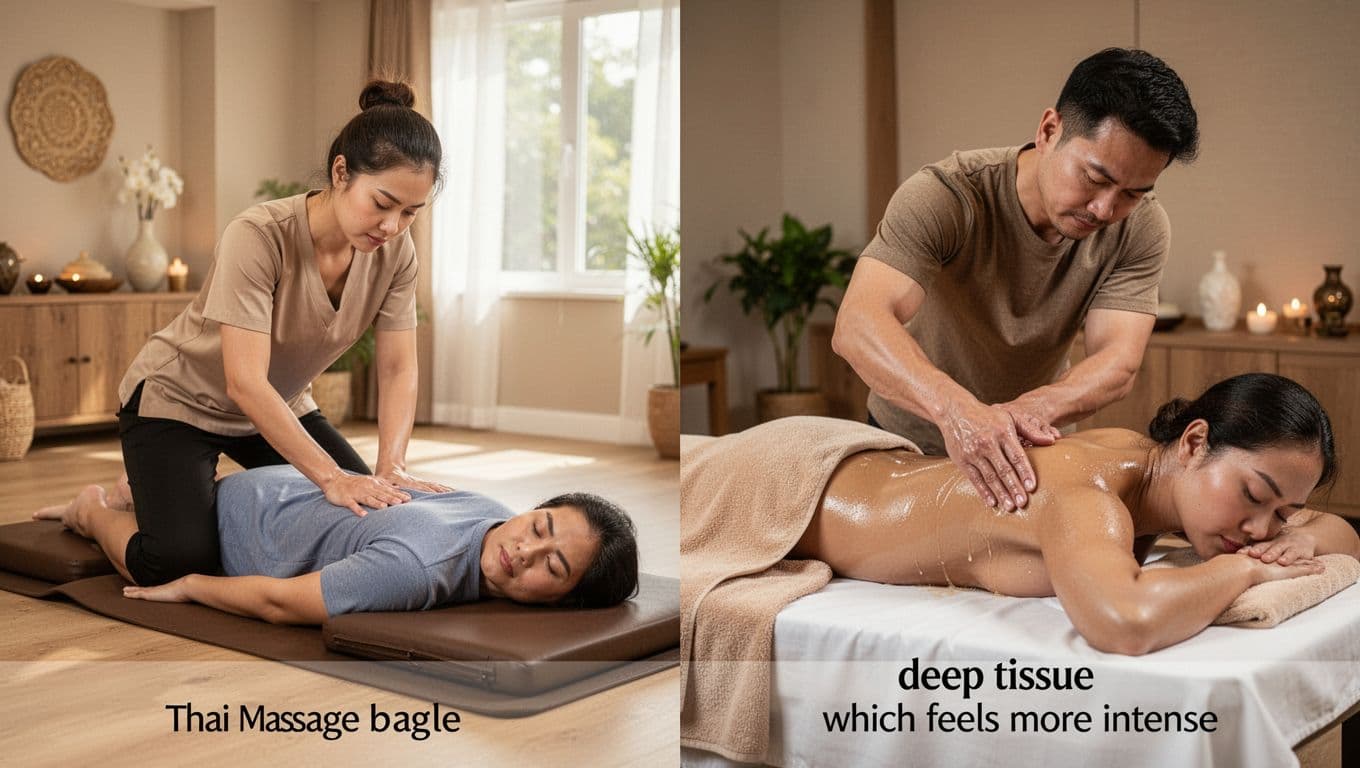
That said, intensity isn’t fixed in either style. A skilled therapist can make deep tissue moderate and controlled, or make Thai Massage very gentle. Your body, your pain level, and the therapist’s approach all matter.
Here’s the practical difference:
- Deep tissue: More focused on deep muscle layers, adhesions, and knots.
- Thai Massage: More focused on full-body pressure, mobility, and assisted stretching.
- Deep tissue sensation: Often slower, firmer, and more pinpointed.
- Thai sensation: Often broader, rhythmic, and mixed with stretching.
If your main issue is one or two problem spots, deep tissue may feel more direct. If your whole body feels stiff, compressed, or out of balance, Thai Massage often makes more sense.
For people who want stronger recovery tools between appointments, these home massage products for relaxation can also support sore muscles, especially after a deeper session.
How Thai Massage differs from hot stone, sports, and aromatherapy massage
These styles all overlap a little, but their main purpose is different. Thai Massage is usually the best fit when you want flexibility, movement, and full-body release. The others tend to be more specialized in how they create relief.
Hot stone massage is built around warmth. Heated stones are placed on the body or used during the massage, often alongside Swedish-style strokes. As a result, it usually feels soothing, heavy, and deeply calming. If heat helps your muscles soften fast, hot stone can feel wonderful. Still, it doesn’t usually offer the same guided stretching or joint opening that Thai Massage does.
Sports massage is more targeted and goal-driven. It often focuses on performance, training load, soreness, or a specific muscle group. The pressure can be firm, and the therapist may use techniques similar to deep tissue. However, sports massage is less about general relaxation and more about keeping you moving well before or after activity.
Aromatherapy massage puts scent at the center of the experience. Essential oils are paired with gentle massage techniques to support calm, mood, and stress relief. If your stress feels mental as much as physical, this style can be a great choice. Thai Massage can calm the mind too, but it does so more through bodywork and movement than through scent and soft strokes.
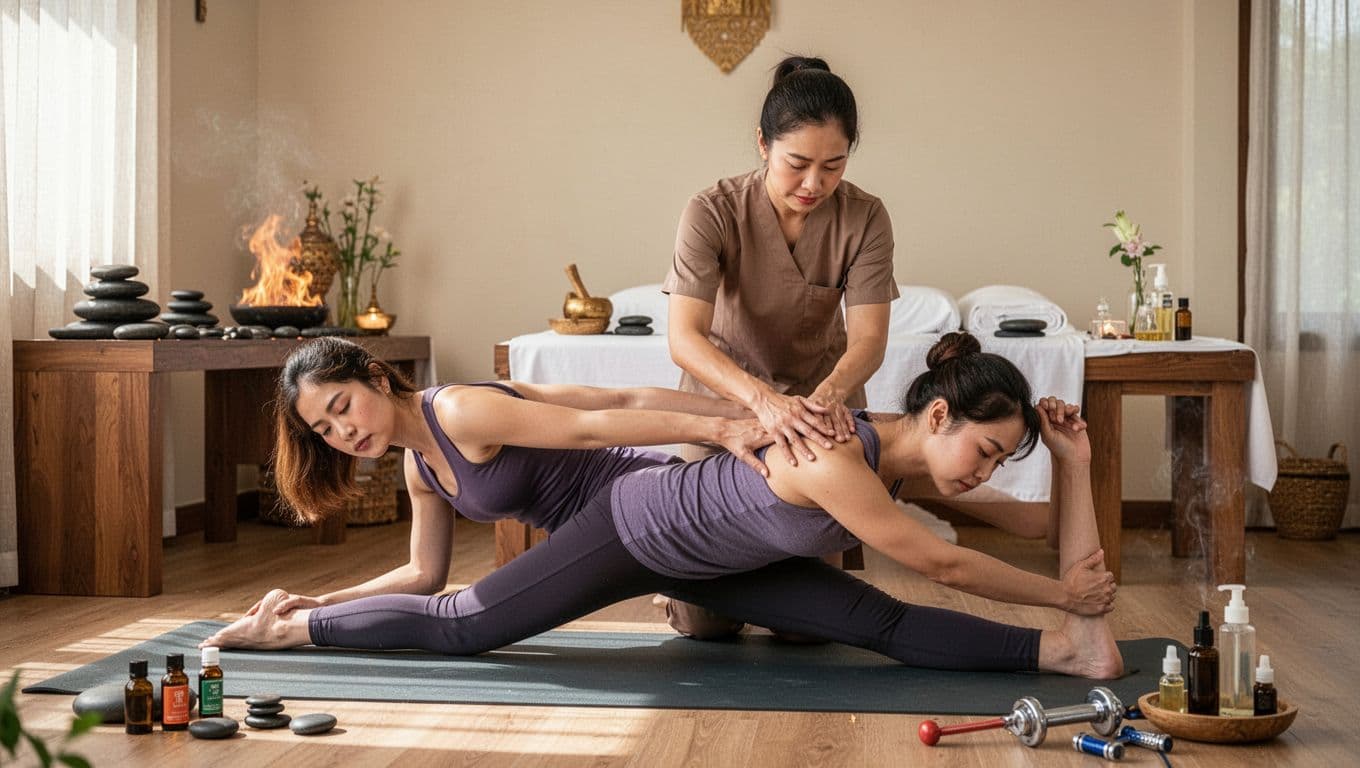
A quick guide can help you match the style to your goal:
| Massage style | Main purpose | Typical feel | Best choice if you want… |
|---|---|---|---|
| Thai Massage | Flexibility, full-body release, mobility | Active, stretching-based, medium to strong | More movement, less stiffness, a refreshed body |
| Hot stone | Relaxation through heat | Warm, soothing, calming | Gentle tension relief and deep comfort |
| Sports massage | Recovery and performance support | Targeted, firm, functional | Help with training soreness or repetitive strain |
| Aromatherapy massage | Stress relief and mood support | Soft, calming, scent-led | A peaceful session that settles your mind |
The bottom line is simple. If you want to drift off, hot stone or aromatherapy may suit you better. If you want recovery tied to exercise, sports massage is usually the better tool. But if you want a session that helps you feel looser, longer, and more mobile, Thai Massage often has the clearest edge.
Who Should Try Thai Massage, and When to Be Careful
Thai Massage isn’t for just one type of person. Its appeal is broad because the session can feel like a reset for both the body and the mind. For some people, it brings relief from all-day stiffness. For others, it offers the satisfying mix of deep release, assisted stretching, and calm focus that other massage styles don’t always give.
At the same time, Thai Massage is not the right fit for every body on every day. That’s not a flaw, it’s simply part of choosing bodywork wisely. The best results usually come when you match the session to your goals, your comfort level, and your current health.
Who tends to enjoy Thai Massage the most
People who love movement often enjoy Thai Massage right away. If you like stretching, mobility work, or that “lighter in your body” feeling after a good workout, this style can be especially rewarding. It doesn’t just rub sore spots, it works through patterns of tightness from head to toe.
Office workers are another common fit. Hours at a desk can leave the hips tight, the chest closed, and the shoulders creeping upward like they’re trying to become earrings. Because Thai Massage uses pressure and guided movement, it often helps with the kind of stiffness that builds from sitting too long.
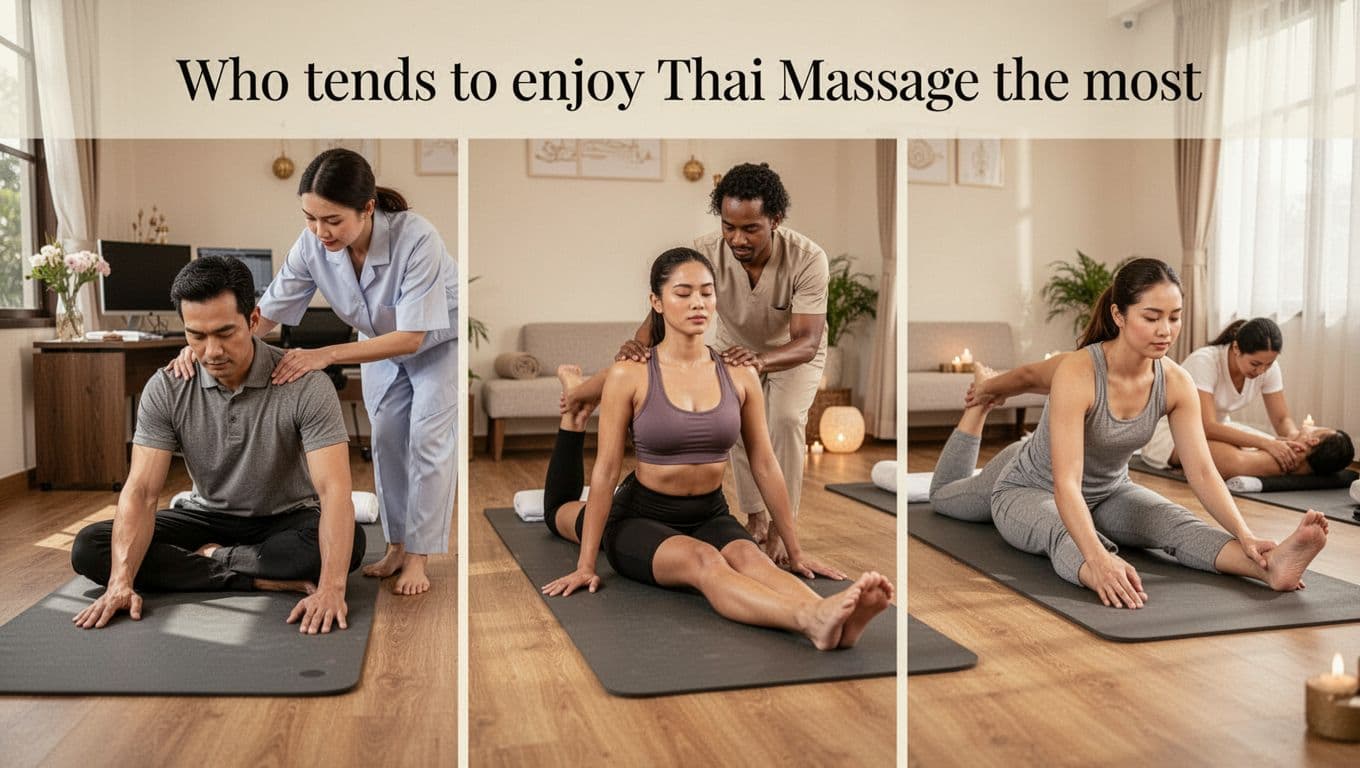
It’s also a strong match for active people. Runners, gym-goers, cyclists, and anyone who trains regularly often enjoy how Thai Massage opens the hips, legs, back, and shoulders. In many cases, it feels less like passive pampering and more like smart recovery.
Beginners can enjoy it too, especially if they want full-body work rather than a session that stays local and light. You don’t need to be flexible, athletic, or experienced. You just need to want a massage that feels both relaxing and energizing, almost like your body got a tune-up and your mind got a break.
Wellness-focused readers often love Thai Massage for the same reason. It supports body awareness. You notice where you’re holding tension, where movement feels easy, and where things feel stuck. That kind of feedback can make the session feel useful, not just pleasant.
In short, Thai Massage tends to suit people who want one or more of these things:
- A strong sense of stretching without doing the work alone
- Whole-body attention, not just one sore area
- Relief from desk-related stiffness
- A session that wakes the body up while still helping the mind settle
Thai Massage often feels best for people who want to leave relaxed, but not flattened.
When Thai Massage may not be the right choice
There are times when Thai Massage should wait, or at least be adjusted. If you’ve had recent surgery, a fracture, a major sprain, or a fresh injury, it’s better to get medical advice first. The stretching and pressure that feel great in a healthy body can be too much for healing tissue.
The same goes for severe osteoporosis or very fragile bones. Thai Massage doesn’t have to be rough, but the traditional style can involve joint movement and broad pressure. In that case, a gentler massage may be safer and more comfortable.
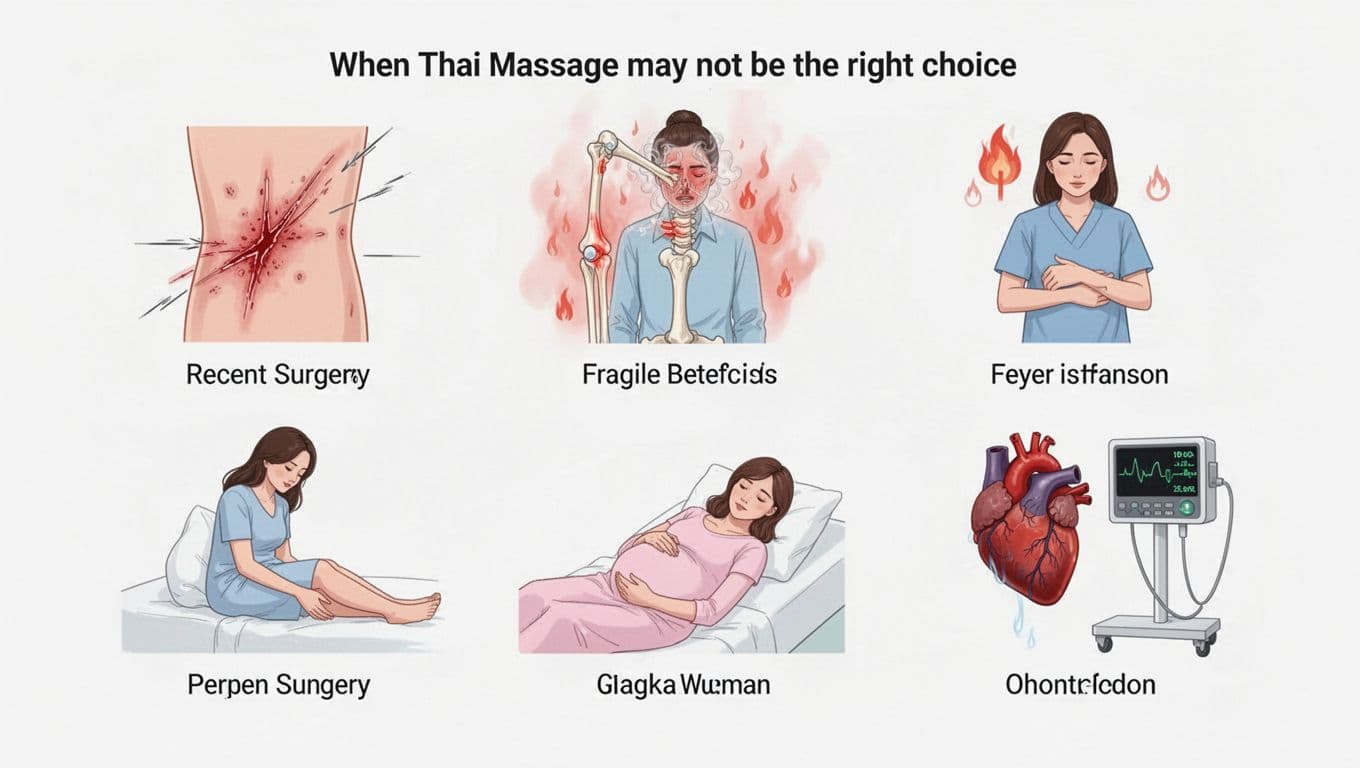
You should also press pause if you have a fever, a contagious illness, or feel generally unwell. Massage is not a “sweat it out” solution. When your body is fighting illness, rest usually makes more sense than bodywork.
Heart health matters too. If you have uncontrolled high blood pressure, recent heart problems, clotting concerns, or another serious cardiovascular issue, get clearance before booking. Similarly, severe pain that hasn’t been diagnosed should be checked by a medical professional first. If pain is sharp, sudden, or getting worse, massage should not be your first stop.
Pregnancy deserves a careful, tailored approach. Some pregnant clients can safely receive massage, but traditional Thai Massage may not suit every stage or every pregnancy. Deep abdominal work, strong twists, and certain stretches may need to be avoided. If you’re pregnant, choose a therapist who understands prenatal care and ask whether a gentler option is more appropriate.
A simple rule helps here: if your body is healing, inflamed, medically unstable, or giving you pain that feels alarming, get advice before booking Thai Massage. That’s not being overly cautious. It’s just smart.
How to choose the right Thai Massage experience for your needs
Thai Massage can vary a lot from one therapist to the next. Some sessions are traditional and fairly strong. Others are gentle, slow, and blended with styles like deep tissue or relaxation massage. That’s why asking a few clear questions upfront can make the whole experience better.
Start with pressure level. If you like firm work, say so. If you’re sensitive, new to massage, or nervous about stretching, say that too. A good therapist won’t expect you to “handle” more than you want. They’ll adjust.
Session length matters as well. A shorter treatment can work if you want a quick reset, but a longer session gives the therapist time to address more of the body without rushing. If your hips, back, and shoulders all feel tight, a longer appointment usually makes more sense.
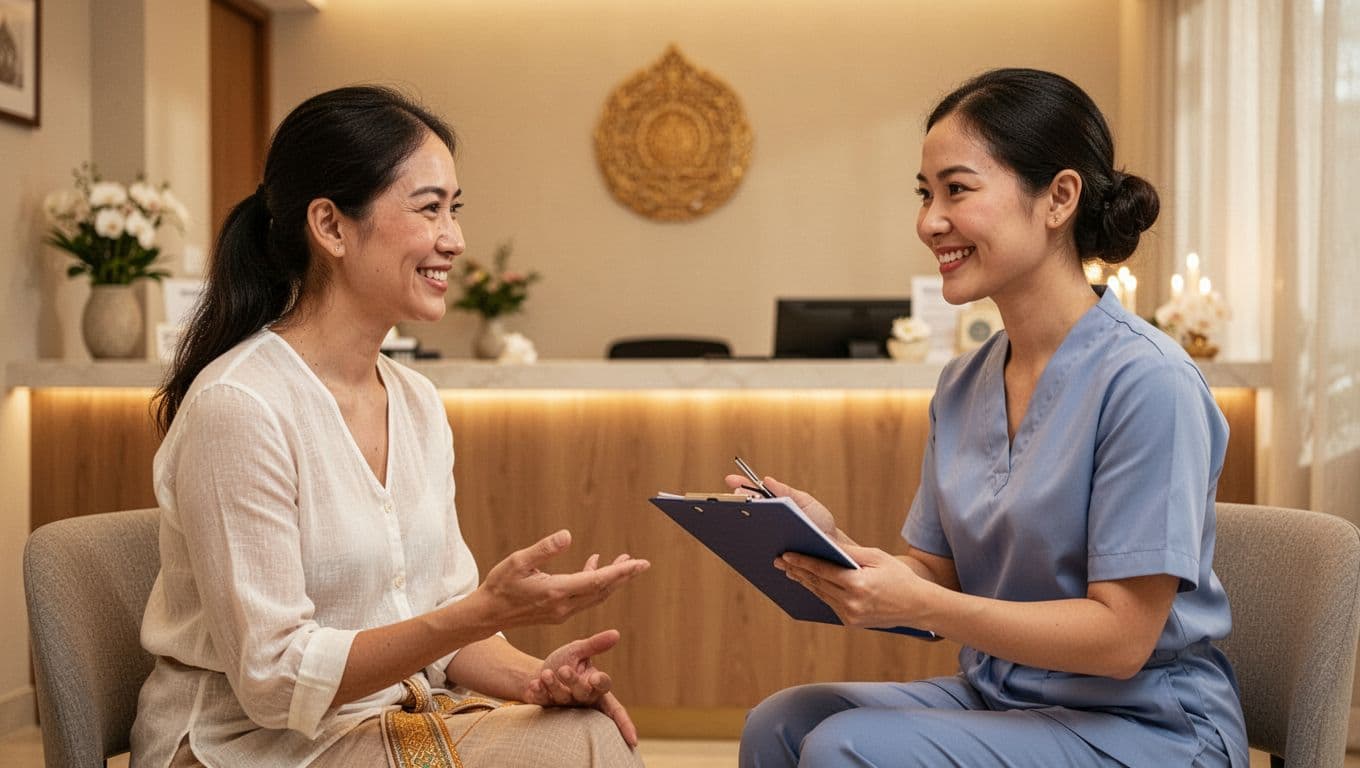
It’s also worth asking about training and style. Some therapists focus on traditional mat-based Thai Massage. Others offer a softer blend that borrows from Thai techniques without using strong stretches. Neither is automatically better. The right choice depends on what your body needs that day.
Here are the questions that help most:
- How strong is the pressure?
- Is the session traditional Thai Massage, gentle Thai, or blended with other techniques?
- What should I expect if I’m a beginner?
- Can you adjust for tight hips, back pain, or limited flexibility?
Communication doesn’t stop after booking. During the session, speak up if a stretch feels too big or the pressure feels too deep. You are not supposed to stay quiet and hope it improves. Thai Massage works best when the therapist can respond to your body in real time.
If you’re choosing a provider, it can also help to look at individual therapist profiles, such as Experienced therapist Monica Betty or Meet therapist Harry Coolstyle, so you can get a better sense of who may suit your comfort level.
For most people, the right fit is simple: choose Thai Massage if you want movement, stretching, and full-body release. Choose a gentler version if you’re curious but cautious. And if your body is waving a yellow flag, slow down, ask questions, and book with someone who listens well.
Conclusion
Thai Massage stands out because it does more than help you relax. It combines steady pressure, guided stretching, and full-body movement, so the result often feels both calming and deeply refreshing. For many people, that means less stiffness, better mobility, a clearer mind, and a stronger sense of connection to the body.
Just as important, the best Thai Massage is never one-size-fits-all. It works best when the pressure, pace, and stretches match your comfort level, goals, and current physical condition. That’s why a good session should feel active and opening, not forced. Recent research continues to support what many regular clients already know, Thai Massage can help with short-term flexibility, stress relief, and everyday muscle tension when it’s done thoughtfully.
If Thai Massage sounds like the right fit, keep the next step simple. Know what you want from the session, whether that’s stress relief, better movement, or help with tight muscles. Then share that clearly, choose a trusted therapist, and pay attention to how your body responds. If you want extra confidence before booking, it can also help to look at happy client feedback and choose a spa experience that feels right for you.
The right Thai Massage doesn’t just feel good in the moment, it can help you move through daily life with more ease.